
Designating the Cranhill Water Tower in Glasgow
Overview
We propose to designate the Cranhill Water Tower in Glasgow as a listed building.
Cranhill water tower, located at the eastern edge of Cranhill housing estate, was built in 1951 and designed by Frank A Macdonald and Partners for Glasgow Corporation. The water tower has a striking design with 16 sleek mushroom-top steel columns supporting a ribbed, square concrete water tank and its design reflects the idealism of much early post-war architecture.
Water towers were an essential functional component of residential estates to adequately supply water pressure to all the homes. Cranhill water tower is the earliest known post-war water tower to survive in Glasgow and is a major example from the unrivalled programme of reinforced concrete water tower construction in Glasgow and its environs during the 1950s and 60s.
We are now gathering views on our proposal to list this structure at category B.
Read more about why we think the water tower meets the criteria for listing by downloading our Report of Handling.
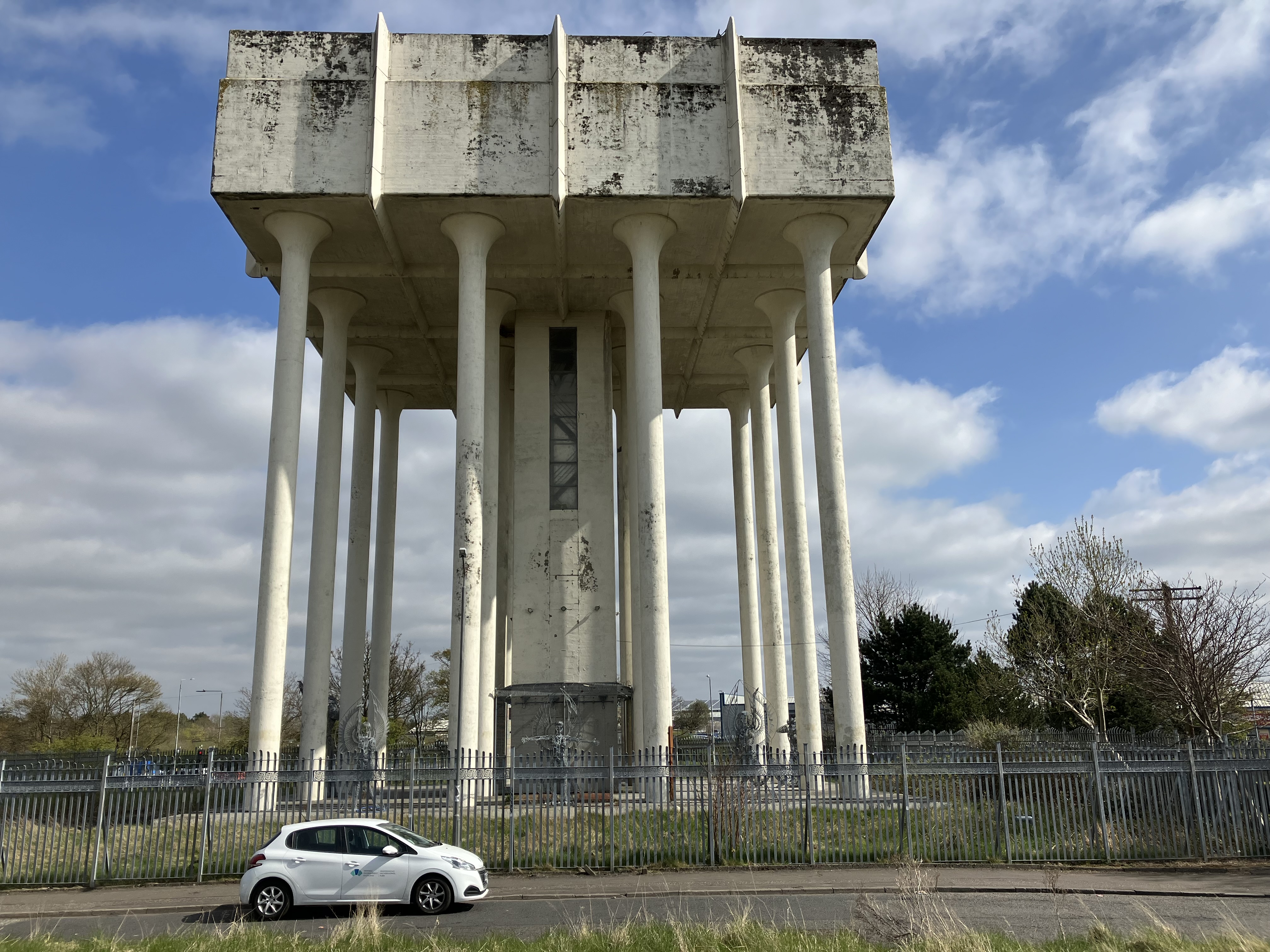
Cranhill water tower from Skerryvore Road, looking east © Historic Environment Scotland
How we designate listed buildings
We list buildings of special architectural or historic interest. A dedicated team researches and assesses all designation applications.
You can find out more about listed buildings in the Advice and Support section of the Historic Environment Scotland website, and read our Designation Policy and Selection Guidance (2019).
To merit listing, the structure must meet set listing criteria.
Find out about the listing process.
Why your views matter
We’d like to know whether you agree with our proposal.
To help you respond to the following survey, please read why we think the water tower meets the criteria for listing in the Report of Handling.
You can tell us if you agree with our proposal by completing the short questionnaire below.
This questionnaire usually takes 5-10 minutes to complete.
Find out what comments we consider and what happens next in our consultation guide or watch our designations video on YouTube.
You can also watch a version of this video in British Sign Language.
Share
Share on Twitter Share on Facebook